
Close
Difference Between Stone Ground Atta aka Cold- Pressed Atta and Regular Atta:
Stone-ground atta vs regular atta is an important topic as more people begin to examine how their daily food is prepared. Atta is consumed in most households every day, and the way wheat is processed can influence its natural characteristics, freshness, and overall quality.
Many people assume that all atta is identical. However, the grinding process, fiber retention, and storage methods can create meaningful differences between stone ground atta and regular atta.
Understanding these differences helps consumers make informed and conscious food choices.
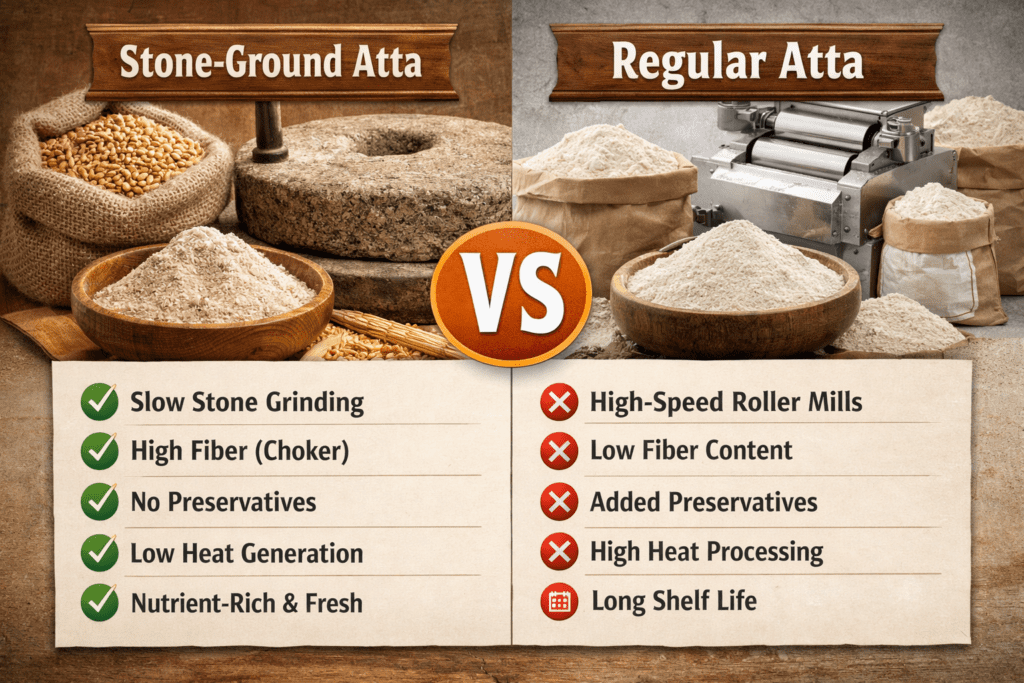
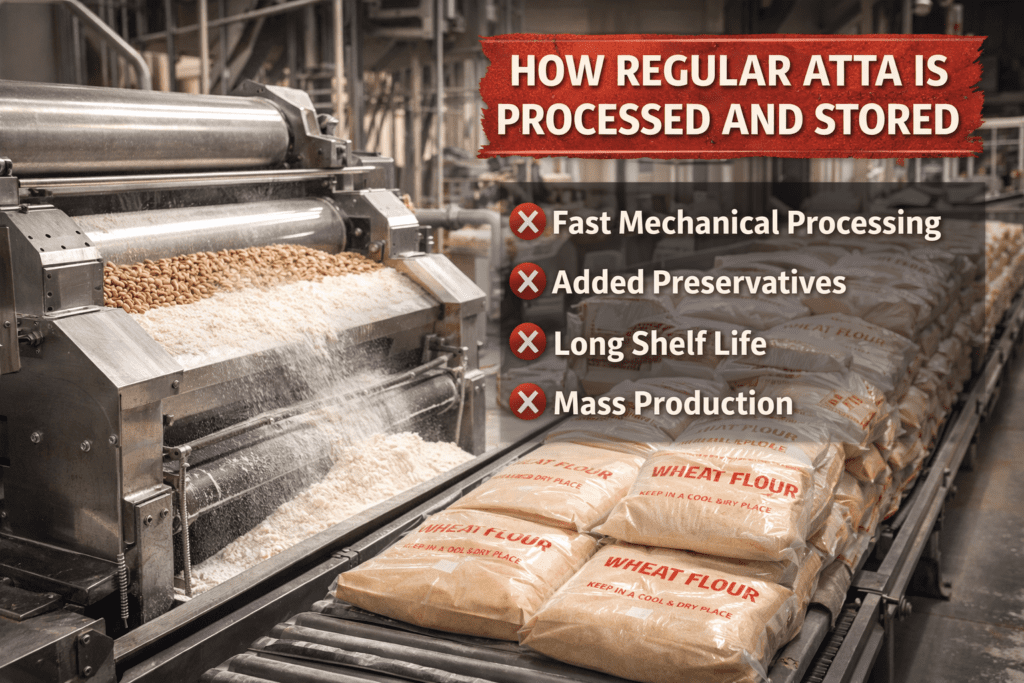
Most packaged atta available in the market is produced using high-speed roller mills. This process is designed for large-scale production, uniform texture, and longer shelf life.
In industrial processing:
To maintain stability and prevent spoilage during long storage and transportation, flour must remain resistant to environmental factors like moisture, insects, and oxidation.
This focus on extended shelf life is essential for mass distribution but makes the process very different from freshly ground flour.
Whole wheat naturally contains bran, commonly called choker, which is the outer layer of the grain.
Choker is a rich source of natural dietary fiber.
Fiber plays an important role in:
In traditional grinding methods, the grain is crushed as a whole, which helps retain the natural fiber structure.
This makes stone ground whole wheat atta closer to the original grain composition.
Stone-ground atta is prepared using traditional grinding between natural stones at slow speed.
In this method:
Because of minimal processing, stone ground atta benefits include preserving the grain in its more natural form.
This method has been used for generations before modern industrial milling became widespread.
| Feature | Stone-Ground Atta | Regular Atta |
|---|---|---|
| Grinding method | Slow stone grinding | High-speed roller milling |
| Heat generation | Low | Higher |
| Fiber (Choker) retention | Naturally retained | May be altered during processing |
| Processing scale | Small batches possible | Large industrial scale |
| Storage duration | Typically shorter | Designed for longer storage |
| Processing approach | Traditional | Industrial |
This clearly explains the difference between chakki atta vs regular atta
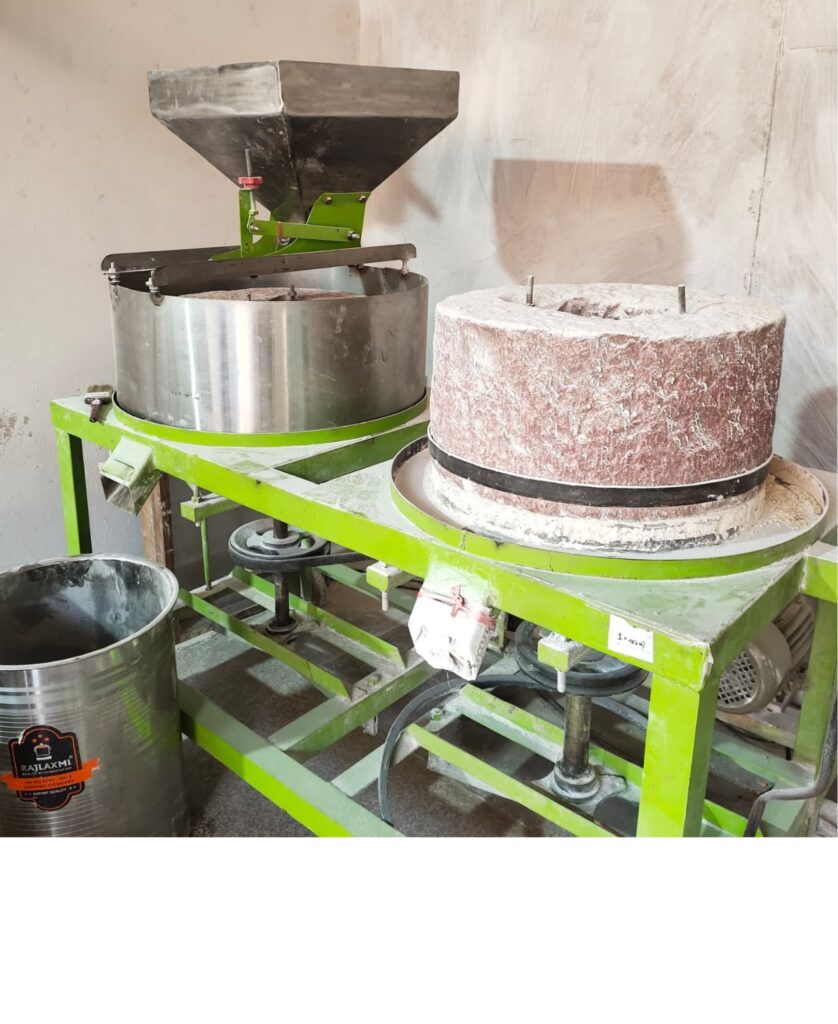
In today’s age of modern technology, traditional stone‑ground Atta is still prepared using natural stones, but now powered by electric motors. The speed is carefully controlled at around 60–70 RPM, ensuring the flour retains the same authentic taste and quality as before.
Freshly ground atta contains natural wheat germ oils. These oils are beneficial but naturally limit shelf life because they can oxidize over time.
Industrial atta is designed to remain stable for extended storage and transportation.
Long shelf stability requires controlling factors like moisture, oxidation, and contamination risk.
Minimally processed atta, when freshly prepared, retains its natural components without relying on extended storage optimization.
This is why fresh atta is often recommended to be consumed within a shorter time frame.
Fiber-rich foods play an important role in balanced nutrition.
Many households that switch to traditional stone ground atta often report noticeable differences in how filling and satisfying their meals feel.
Because fiber supports slower digestion and sustained satiety, it can help regulate eating patterns naturally.
Some individuals have shared feedback that switching to freshly prepared, fiber-rich atta helped support their weight management goals when combined with a balanced lifestyle.
It is important to note that overall lifestyle, diet, and activity level all play important roles in health outcomes.
Freshly ground atta often has:
Because fresh atta vs packaged atta differs mainly in freshness and processing, many households exploring traditional food preparation methods prefer minimally processed flour.
As awareness increases, many people are revisiting traditional food preparation methods that were commonly used in earlier generations.
Stone grinding is one such method that focuses on slow processing rather than speed and large-scale efficiency.
Understanding stone-ground atta vs regular atta allows consumers to make choices aligned with their personal food preferences.
When comparing stone-ground atta vs regular atta, the main differences relate to:
Stone grinding preserves the grain in its more natural state, while roller milling focuses on efficiency and large-scale production.
Consumers can choose based on their personal preferences and priorities.
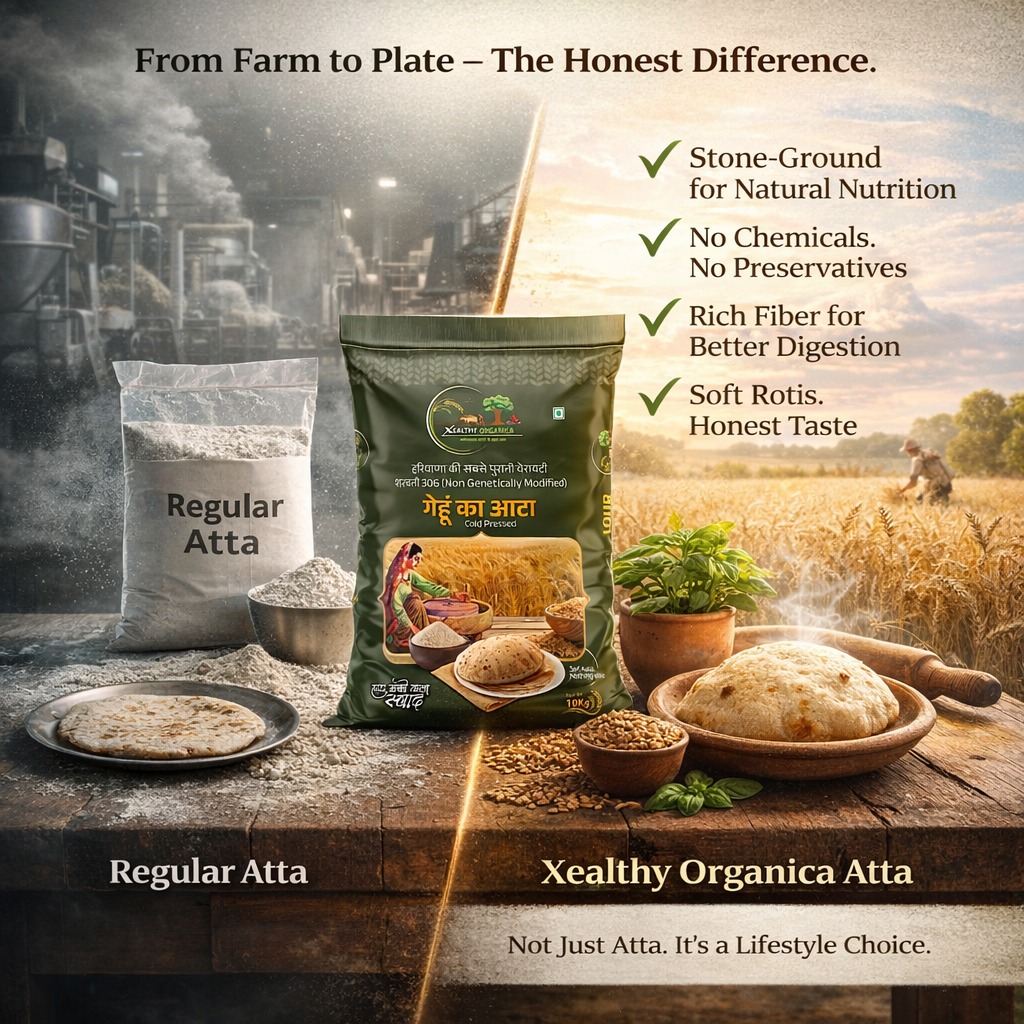
Atta is a daily staple, and the method used to prepare it influences its freshness, fiber retention, and natural characteristics.
Traditional stone grinding represents a slower, minimally processed approach, while modern roller milling represents an industrial approach designed for scale and storage.
As more people become aware of food processing methods, interest in traditionally prepared foods continues to grow.
Xealthy Organica prepares atta using traditional stone grinding methods in small batches without preservatives or chemical additives. The focus is on maintaining freshness, preserving natural fiber (choker), and delivering flour closer to its original grain form. We follow a Same‑Day Milling, Same‑Day Dispatch policy to ensure you always receive Atta that is freshly prepared. You may also Visit our site to experience the authenticity. Atta – Xealthyorganica . Follow our Instagram Page or FB Page for more informational content.

Stone-Ground Atta vs Regular Atta: Which is Healthier? Complete Guide
Best Atta to choose
What is healthy for you.